Home › Guides & Blog › Home Mobility & Bathroom Safety Checklist
Home Mobility & Bathroom Safety Checklist: What to Look For in Shower Chairs, Grab Bars, Rollators and More
What to measure and compare before you buy a shower chair, grab bars, a rollator, a cane or a reacher — weight ratings, adjustable height, folding, installation and return policies — plus who to ask about fit.
Disclosure: This guide contains affiliate links. If you buy through them, ITS-ALL-HERE may earn a commission at no extra cost to you. We don't list prices because they change often; tap a link to see the current price on the seller's site. Learn more.
Many shower chairs, grab bars and walkers look almost the same in the photos, and it's hard to tell which one will actually fit your bathroom, your doorways and the person using it. This checklist walks through what to measure and what to compare before you buy, in plain English. It's a shopping guide, not medical advice. For what's right for you or a family member, talk with your doctor, physical therapist, occupational therapist or pharmacist. If you'd rather see equipment in person, our 📍 Medical locator finds pharmacies and home medical equipment and mobility supply stores near your city or ZIP.
1. Measure before you shop
A tape measure and ten minutes can save you a return. Before you buy anything, write down:
- Doorway widths for the bathroom, bedroom and front door, measured at the narrowest point with the door open.
- Tub or shower size: the inside width of the tub, the height of the tub wall, and the floor space inside a walk-in shower.
- Toilet height and the space on each side of it, if you're thinking about a toilet riser or safety frame.
- Hallway turns and tight corners where a walker or rollator would need to turn around.
Compare those numbers with the dimensions listed by the maker on the product page. If a listing doesn't show the measurements you need, look for one that does or ask the seller before ordering.
2. Shower chairs and transfer benches
A shower chair sits inside the tub or shower. A transfer bench straddles the tub wall, with two legs inside and two outside, so you can sit down outside the tub and slide across instead of stepping over. Which one makes sense depends on your bathroom and on the person using it, so this is a good question for a physical or occupational therapist. When you compare models, look at:
- Weight capacity printed by the maker. Pick one rated comfortably above the user's weight, and don't rely on a number that isn't stated clearly on the listing or box.
- Adjustable legs so the seat height can be set for the user and leveled on an uneven tub floor.
- Rubber tips or suction feet on the legs, a back rest, and arm rests if the user wants something to push up from.
- Drainage holes in the seat and rust-resistant materials, since the chair will be wet every day.
- Fit: check that a transfer bench's legs actually fit your tub width and wall height.

Heavy-Duty Shower Chair / Transfer Bench
Shower chairs and transfer benches for safer bathing. Check weight capacity and whether it fits your tub or stall.
Check the maker's weight capacity and the seat and leg dimensions against your tub before you buy.
3. Grab bars: studs vs. suction
Grab bars are only as good as what they're attached to. Bars that screw into wall studs or into solid blocking behind the wall are what most makers recommend for support. Suction-cup bars are easy to put up and take down, but many makers say they're for balance only and shouldn't hold body weight, and the suction can loosen without much warning. Read the packaging carefully for what each bar is rated for.
- Use a stud finder, or ask a handyman or contractor to install bars into studs or blocking, following the maker's instructions.
- Check the bar length and diameter, and look for a textured or knurled grip that's easier to hold when wet.
- Think about where hands naturally go: getting in and out of the tub, standing up in the shower, and next to the toilet.
- Renters should ask the landlord before drilling. Some will allow it or will install bars themselves.
Bathroom Safety Grab Bars
Wall-mounted grab bars for toilets and showers. Install into solid backing per the maker's instructions.
Install into solid backing per the maker's instructions; suction bars are usually rated for balance only.
4. Toilet risers and safety frames
A raised toilet seat or a frame with arm rests can make sitting down and standing up easier. Measure your toilet bowl (round or elongated) and its height first, and check that the riser locks on securely and has a weight rating printed by the maker. Frames that clamp to the toilet or stand on their own legs need enough room on both sides.
5. Rollators, walkers and canes
A rollator is a walker with wheels, hand brakes and usually a seat. A standard walker has no wheels or just two in front. A cane is the lightest option. Which type fits the user is a question for their doctor or physical therapist, who can also help set the right handle height. When you're comparing models, look at:
- Weight capacity and seat height, both as printed by the maker.
- Handle height range, so it can be adjusted to the user.
- Folded size and weight, if it has to fit in a car trunk or be lifted up steps.
- Overall width compared with your narrowest doorway.
- Wheel size: smaller wheels are common for indoor use, while larger wheels usually roll better on sidewalks and grass.
- Brakes that are easy to squeeze and lock for the user's hands.

Folding Rollator Walker with Seat
Folding rollators with seats and hand brakes for indoor/outdoor stability. Confirm weight rating and seat height before you buy.
Compare the maker's weight rating, seat height, folded size and overall width with your doorways.
Adjustable Ergonomic Walking Cane
Height-adjustable canes with comfortable grips. A physical therapist can help you set the right length.
A physical therapist can help you set the right length; check the adjustment range on the listing.
6. Small daily living aids
Some of the most useful items are also the least expensive. Long-handled reachers help pick things up from the floor or a high shelf, and sock aids and dressing sticks help with getting dressed with less bending.
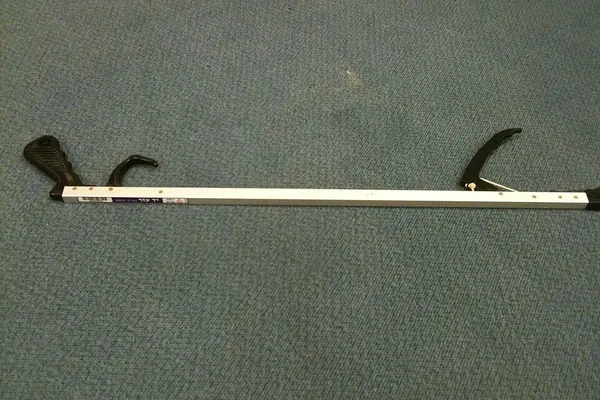
Reacher Grabber Pickup Tool
Long-handled reachers for picking up items without bending — handy after surgery or with limited mobility.
Check the overall length and grip style on the listing.

Non-Slip Sock & Dressing Aid Kit
Dressing sticks, sock aids and related helpers for putting on socks and shoes with less strain.
An occupational therapist can suggest which dressing aids are worth trying.
7. Check return policies and who to ask
Before you order, read the seller's return policy. Some sellers don't accept returns on bath and personal-care items once they've been opened or used, and large items can be costly to ship back.
It's also worth asking for help. A pharmacist, physical therapist, occupational therapist or doctor can talk through what kind of equipment fits the person and the home. Some insurance plans may help pay for certain equipment when a clinician orders it, so it's worth asking your clinician or insurer before you buy. A local medical supply store can also let you try a rollator or shower chair in person. Use our Medical locator to find one near you.
A quick home mobility shopping checklist
- Measure doorways, the tub or shower, the toilet and tight corners.
- Ask a doctor, physical therapist, occupational therapist or pharmacist what fits the user.
- Compare the weight capacity printed by the maker, not a guess.
- Look for adjustable heights and check the adjustment range.
- Check folded size and weight if it travels or has to be lifted.
- Install grab bars into studs or solid blocking; treat suction bars as balance aids only, unless the maker says otherwise.
- Read the return policy and keep the box until everything fits.
The bottom line
The right piece of equipment is the one that fits the person, the bathroom and the doorways. Measure first, compare what each maker actually prints on the label, install grab bars into solid backing, and ask a clinician about fit before you buy. Browse shower chairs, grab bars, rollators, canes and reachers in the 🦯 Mobility, Bath Safety & Daily Living Aids section of our Medical page.
This guide is for general shopping information only and isn't medical advice. Talk with your doctor, physical therapist or pharmacist about what's right for you.
More from Guides & Blog
- Road Trip & RV Essentials Checklist: What to Buy Before Your First Trip
- Winter Horse Care Checklist: Barn & Pasture Supplies to Buy Before the Cold
- Snow Blower Buying Guide: Single-Stage vs. Two-Stage, Gas vs. Battery
- Used Car & Pickup Truck Buying Checklist: What to Check Before You Buy
- Pet Care Essentials: A Buying Guide for Dog and Cat Owners
- Kitchen Essentials: Countertop Appliances and Tools Worth Owning
- Online Privacy Basics: VPNs, Password Managers and a Safer Smart Home
- How to Choose a Racing or Motorcycle Helmet
- Home Workout Essentials: How to Build a Simple Home Gym
- Carry-On & Flight Day Essentials: Pack Smarter for Any Trip